
 SERVING ANTHEM & SURROUNDING AREAS
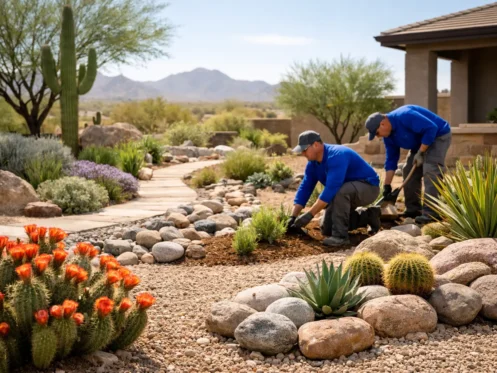
A North Phoenix yard can look polished and full without asking for a thirsty lawn, constant replacements, or a weekend of hand-watering. The best low water landscaping is not a yard covered in rock. It is a thoughtful combination of plants, shade, usable surfaces, and efficient watering zones that fits the way your property is used.
For homeowners and property managers, the goal is simple: reduce unnecessary water use while keeping the landscape attractive, functional, and manageable through Arizona heat, wind, and seasonal temperature swings. The best results come from designing the whole property around conditions already present, rather than trying to force a high-water look into a low-desert climate.
What Makes the Best Low Water Landscaping Work
Low-water landscaping is often called xeriscaping, but the term can be misleading. A well-designed water-wise yard can include trees, flowering color, artificial turf, pavers, seating areas, and even a small area of natural grass when it serves a real purpose. The difference is that every feature earns its place.
A successful plan starts with the property itself. South- and west-facing exposures receive punishing afternoon sun. Areas near block walls can hold heat well into the evening. A front entry may need curb appeal and visibility, while a backyard may need privacy, shade, pet space, or room for entertaining. Those needs should shape the plant palette and hardscape layout.
Water savings also depend on grouping plants with similar needs. Desert-adapted trees and shrubs should not share the same watering schedule as seasonal flowers or a small turf area. Separating those needs into sensible zones helps prevent overwatering, weak growth, and wasted water.
Start With Shade Before Adding Color
In the Sonoran Desert, shade is one of the most valuable landscape features a property can have. The right canopy tree can cool a patio, soften reflected heat from a wall, and make outdoor living areas more comfortable for much of the year. It can also reduce stress on nearby plants.
Desert willow, palo verde, mesquite, and certain acacias are common choices, but the best tree depends on mature size, root space, litter tolerance, and the amount of filtered versus dense shade you want. A small courtyard calls for a different solution than a large backyard with an outdoor kitchen or pool deck.
Think beyond the first year of growth. A young tree may look modest at installation, but its mature canopy can affect views, lighting, roof clearance, and how much sun reaches a putting green or planting bed. Planning for that mature form avoids expensive changes later.
Once shade is in place, flowering shrubs and accent plants become easier to use well. Color should feel intentional, not scattered across the yard in isolated patches that require extra attention.
Choose Plants for Exposure, Not Just Appearance
A plant that looks excellent at a nursery may struggle if it is placed against a west-facing wall or in an area with reflected pool-deck heat. Matching plants to their exposure is one of the most practical decisions in low-water design.
For full sun, lantana, red yucca, brittlebush, desert spoon, agave, bougainvillea, and Texas sage can provide strong form or seasonal color with relatively modest water once established. For filtered shade, options such as yellow bells, chuparosa, and certain native shrubs can add softer texture and wildlife interest.
Cactus and succulents have their place, especially as sculptural accents near boulders, entryways, or modern paver areas. Still, a yard made entirely of spiny plants can feel harsh and may not suit families, pets, or high-traffic commercial spaces. The strongest designs balance distinctive desert character with plants people can comfortably live around.
Use Hardscape to Reduce Water and Improve How You Live Outside
Pavers, decomposed granite, decorative rock, seat walls, and patios do more than lower the planted area. They create structure. A well-placed paver path can guide guests from the driveway to the front door, while a larger patio can turn an underused backyard into a real gathering space.
The trade-off is heat. Large, unshaded areas of dark pavers or rock can make a yard feel hotter in summer. Light-reflective materials may reduce surface temperature, but they can increase glare. Material selection should be considered alongside shade, orientation, and how the space will be used at different times of day.
Artificial turf can be a practical choice for a clean green look, pet areas, play spaces, and putting greens. It eliminates mowing and avoids the ongoing water demands of natural grass. However, it can become hot in direct summer sun, and it needs proper base preparation, drainage, edging, and periodic cleaning to perform well. It works best as one element in the design, not as a default replacement for every planted area.
Build Healthy Soil and Finish Beds Properly
Arizona soil can be compacted, rocky, alkaline, or unevenly drained. Installing the right plant in poor soil may still lead to disappointing results. Preparing planting areas, setting plants at the correct depth, and allowing for drainage are foundational details that affect long-term health.
Mulch matters, too. Decorative rock is durable and fits many desert designs, but it can retain heat. Organic mulch can help moderate soil temperature and support soil health around certain trees and shrubs, though it may need periodic renewal. Some properties benefit from both: rock in high-visibility desert beds and organic mulch in protected planting zones.
Avoid covering every inch of soil with heavy rock simply because it seems low maintenance. Leaves, seed pods, and windblown debris still collect, and dense rock can make future plant changes more difficult. A low-water yard should be easier to maintain, not impossible to adapt.
Water Deeply, on a Purposeful Schedule
Even desert plants need consistent water while they establish. The difference is that established plants generally perform better with deep, less frequent watering than with frequent shallow cycles. Shallow watering encourages roots to stay near the surface, where heat and dry conditions affect them most.
Seasonal adjustments are essential. A schedule that works in July will not make sense during cooler winter weather. Rainfall, plant age, soil type, sun exposure, and shade all change how much water a landscape needs. Mature trees, new shrubs, cactus, and turf-like areas should not be treated as though they have identical requirements.
For larger residential properties and commercial sites, a professionally planned watering layout makes routine management more predictable. It also gives seasonal residents greater peace of mind when they are away from their Arizona home. The objective is not simply to use less water. It is to use the right amount in the right place.
Plan for Maintenance From Day One
The lowest-maintenance landscape is not necessarily the one with the fewest plants. It is the one designed with access, mature size, and seasonal care in mind. Shrubs need enough space to grow without being repeatedly cut into rigid shapes. Trees need room away from roofs, walkways, and lighting. Groundcovers should be selected for their ability to stay contained.
For commercial properties, this approach supports a consistent appearance between service visits. For homeowners, it means fewer surprises and less time spent correcting overcrowding, bare spots, or plants that never suited the location.
A good landscape changes over time. Trees grow, shade patterns shift, and the way a family uses the yard can evolve. Starting with a durable low-water foundation gives you room to add features later without rebuilding the entire property.
The best low water landscaping should make an Arizona property feel more livable, not more limited. When plant choices, shade, surfaces, and watering needs work together, the result is a landscape that respects the desert while still giving you a place you are proud to come home to.