
 SERVING ANTHEM & SURROUNDING AREAS
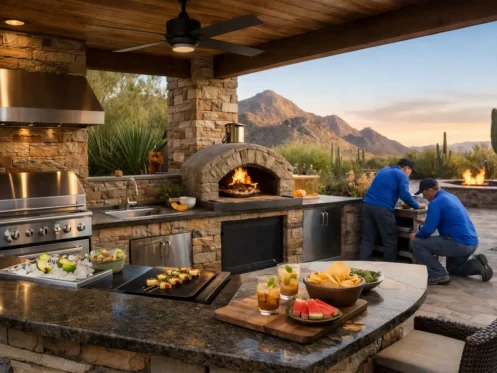
At 5 p.m. in an Arizona backyard, the difference between a grill station and a true gathering space comes down to planning. The best outdoor kitchen design ideas account for intense sun, warm evenings, wind, entertaining habits, and the way the kitchen connects to the pool, patio, and home. A beautiful kitchen should be easy to use on a Tuesday night and ready for a crowd on Saturday.
Start With How You Actually Entertain
Before choosing stone color or appliances, consider the traffic pattern. Do you want the cook to face guests at a bar? Will the kitchen serve a covered patio, pool deck, or open seating area? Is it primarily for two people, weekend family dinners, or larger gatherings?
A well-designed outdoor kitchen keeps hot cooking zones separate from where people sit and walk. It also gives the cook a clear view of the backyard rather than facing a wall. For many North Phoenix and Anthem homes, placing the kitchen near the main patio door makes serving and cleanup easier, but it should not block the natural path between the house and the pool.
12 Outdoor Kitchen Design Ideas That Work Hard
1. Build the Layout Around the Grill
The grill is usually the centerpiece, so give it adequate landing space on both sides. A small counter beside the grill quickly becomes crowded with plates, utensils, and serving trays. Even a compact kitchen feels more functional when the grill has room for prep on one side and finished food on the other.
If a smoker, pizza oven, or griddle is part of the plan, treat it as a dedicated cooking zone rather than an afterthought. Each appliance needs safe clearance, ventilation, and enough space for someone to use it without creating a bottleneck.
2. Create Shade Before Adding More Appliances
In the desert, shade can matter more than an extra burner. A pergola, solid patio cover, or well-positioned shade structure can make the kitchen usable through more of the year while protecting seating, cabinetry, and guests from direct afternoon sun.
The right choice depends on exposure. A west-facing kitchen may benefit from a solid roof or added side shade, while a partially covered space may be comfortable with an open pergola and a ceiling fan. Plan shade early, since posts, lighting, and utility routes are easier to coordinate before the kitchen is built.
3. Choose Countertops Made for Heat and Sun
Outdoor countertops need to handle more than spilled drinks. Arizona heat, UV exposure, dust, and temperature swings can be hard on the wrong material. Natural stone, quality porcelain slab, and properly selected concrete are popular options because they offer durability and a finished appearance.
Every material has trade-offs. Lighter colors stay more comfortable in direct sun but may show cooking stains more easily. Darker stone can look dramatic, but surfaces may become too hot to touch during the day. A contractor can help match the material to the kitchen’s exposure and maintenance expectations.
4. Add a Bar That Faces the Conversation
A raised bar or counter-height island gives guests a place to sit without crowding the cooking area. It also turns a simple grill wall into a destination. For homes that regularly host friends or family, bar seating often delivers more value than adding a large appliance that sees limited use.
Leave enough clearance behind stools for people to move comfortably. This is especially important near pool access or patio doors, where chairs can otherwise interrupt the main walkway.
5. Use Storage You Will Actually Need
Outdoor-rated drawers and cabinets keep grilling tools, trash bins, paper goods, and serving pieces close at hand. Storage reduces trips in and out of the house, which is one of the main reasons homeowners invest in an outdoor kitchen in the first place.
Think beyond cabinet doors. A pull-out trash drawer, utensil drawer, enclosed propane storage, and a dry area for linens can make a major difference in day-to-day use. Select cabinet finishes that are designed to resist fading and are easy to wipe clean after dusty or windy days.
6. Plan Refrigeration for the Way You Host
An outdoor refrigerator is useful for cold drinks, marinades, and quick access to ingredients. For frequent entertainers, a dedicated beverage cooler can prevent guests from opening the food refrigerator every few minutes. In a smaller kitchen, one dependable outdoor-rated unit may be the smarter investment.
Avoid choosing refrigeration by appearance alone. Outdoor units need to perform in high temperatures, and they need appropriate airflow around them. A tight cabinet opening without ventilation can shorten appliance life and create frustrating performance issues.
7. Make Lighting Part of the Design
An outdoor kitchen should remain safe and inviting after sunset. Task lighting at the grill and prep counters helps with cooking, while softer lighting under counters, along walkways, or near seating creates a more relaxed atmosphere.
Layered lighting gives you options. Bright illumination works for food preparation, while dimmable accents make a dinner party feel less like a work zone. Good lighting also improves visibility around steps, pool edges, and transitions between patio materials.
8. Connect the Kitchen to the Rest of the Backyard
The strongest outdoor kitchen design ideas do not treat the kitchen as a stand-alone feature. Repeat materials from the patio, pool deck, fireplace, or planter walls so the space feels intentional. A matching paver border, stone accent, or countertop color can tie separate backyard zones together.
This is particularly valuable during a larger backyard renovation. Coordinating the kitchen with hardscape, lighting, artificial turf, and gathering areas creates a finished result that feels more natural than adding features one at a time.
9. Include a Sink When Cleanup Is a Priority
A sink is not essential for every kitchen, but it is a major convenience for homeowners who prepare full meals outdoors. It provides a place to rinse produce, wash hands, fill pots, and handle quick cleanup before food goes back inside.
A sink adds planning and cost, so it makes the most sense when the kitchen will be used regularly. For a compact grill island, additional prep counter and storage may provide better value. The right decision depends on the distance from the indoor kitchen and how much cooking happens outside.
10. Use Wind-Smart Placement
Desert breezes can be welcome until smoke blows across the dining table or into an open door. Consider prevailing wind, nearby walls, rooflines, and the location of seating when deciding where the grill belongs.
A kitchen tucked too tightly into a corner can trap heat and smoke. One placed too far into the yard can feel disconnected from the house. The goal is a location that is open enough for comfort but protected enough to feel like a defined entertaining area.
11. Add a Fireplace or Fire Feature Nearby
Cooking draws people in, but a fire feature encourages them to stay. A fireplace, fire pit, or fire table can extend the use of the patio during cooler evenings and create a natural second zone for conversation after dinner.
Keep the fire feature close enough to feel connected, but not so close that the kitchen becomes crowded or overly warm. This pairing works especially well in larger backyards where guests can move between cooking, dining, and lounging spaces.
12. Design for Easy Long-Term Care
An outdoor kitchen is an investment, and simple maintenance choices protect it. Choose finishes that suit the local climate, avoid unnecessary seams that collect grime, and make sure access panels and appliances can be serviced without dismantling surrounding features.
Thoughtful construction details matter here. Proper drainage around the patio, stable foundations, quality masonry work, and clean transitions between materials help the kitchen look good long after the first cookout. A lower-maintenance design also gives seasonal residents more confidence that their backyard will remain ready to enjoy when they return.
Bring the Plan Together Before Construction
A good outdoor kitchen should feel like it has always belonged in the backyard. That takes more than selecting a grill and countertop. It requires a complete view of the patio layout, shade, hardscape, lighting, utilities, seating, and future maintenance needs.
SonoranScapes helps homeowners plan outdoor living spaces with that full-picture approach, combining detail-oriented craftsmanship with clear communication from design through construction. Bring photos of kitchens you like, measurements of your patio, and an honest picture of how you want to use the space. The best starting point is not a catalog appliance – it is a backyard plan that makes every meal outside easier to enjoy.