
 SERVING ANTHEM & SURROUNDING AREAS
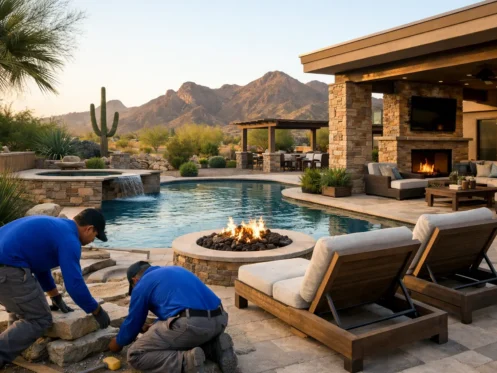
A backyard in North Phoenix should not sit unused from May through September. The best outdoor living design trends are less about chasing a look and more about building comfort into every square foot: dependable shade, surfaces that stay practical, lighting that extends the evening, and plantings that suit the desert rather than fight it.
For Arizona homeowners, a successful outdoor renovation starts with how the space will actually be used. A family that hosts weekend cookouts needs a different layout than seasonal residents looking for a polished, easy-care property. The right plan balances visual impact with durability, water awareness, maintenance needs, and the realities of intense sun.
Outdoor Living Design Trends That Work in Arizona
Shade is becoming the centerpiece
Shade structures remain one of the most valuable backyard upgrades because they make everything else more usable. A well-positioned patio cover, pergola, ramada, or covered outdoor kitchen can turn an exposed yard into a space people want to enjoy in the morning, at sunset, and through much of the year.
The trend is moving toward shade that feels integrated with the home and landscape, not added as an afterthought. Clean-lined structures, warm wood tones, modern metal details, and coordinated paver surfaces create a more finished appearance. Placement matters just as much as the material. The goal is to shade seating and cooking areas during the hours your household uses them most, while preserving views and circulation through the yard.
A pergola can offer a lighter architectural look, but it will not provide the same relief as a solid roof. For homeowners prioritizing true heat protection, a more substantial covered structure may be the better investment. It depends on the patio orientation, existing trees, budget, and whether the space needs to perform as an everyday outdoor room.
Outdoor kitchens are being designed for real use
Outdoor kitchens are no longer limited to a built-in grill surrounded by a small counter. Today’s designs often include generous prep space, weather-ready storage, seating at a bar-height counter, refrigeration, and dedicated zones for serving food and drinks. The best layouts allow the cook to stay part of the conversation instead of facing a wall while everyone else gathers nearby.
Function should lead the design. Consider where guests will stand, where food will be placed, and how often the kitchen will be used. A compact grill island can be exactly right for a smaller patio or a homeowner who entertains occasionally. For larger yards and frequent gatherings, a full cooking and dining zone can create a natural backyard destination.
Materials deserve careful attention in Arizona. Pavers, stone veneers, concrete countertops, and durable cabinetry can all work well when selected and installed for sun exposure and outdoor conditions. Choosing finishes that complement the home also helps an outdoor kitchen feel like a permanent upgrade rather than a standalone feature.
Pavers define spaces with lasting appeal
Pavers continue to be a leading choice for patios, walkways, pool decks, and gathering areas. They bring texture and color to a yard while offering design flexibility that plain concrete often lacks. Large-format pavers, subtle mixed tones, and clean border details are especially popular for homeowners seeking a modern but timeless result.
Beyond appearance, pavers help organize the backyard. A change in pattern or color can separate a dining area from a fire feature, create a clear route from the house to the pool, or frame a seating area without adding walls. This is particularly useful in open yards where a thoughtful layout makes the property feel more intentional.
Pool deck remodels are another area where pavers can make a major difference. Older decking may look dated, feel uneven, or no longer match the home’s style. A refreshed deck can improve the visual connection between the pool, patio, landscaping, and outdoor entertaining areas. Surface selection should account for comfort underfoot, drainage, slip resistance, and the amount of direct afternoon sun.
Fire features are shifting toward flexible gathering spaces
Fireplaces and fire pits remain popular because desert evenings can be surprisingly cool, and a flame naturally draws people together. Current designs tend to favor low-profile fire pits with surrounding lounge seating, linear fire features that complement contemporary architecture, or fireplaces that anchor a covered patio.
The right choice comes down to how the space will be used. A fire pit encourages a more open, social arrangement and can work well in the center of a dedicated seating area. A fireplace creates a stronger focal point and can add privacy or visual structure along a property edge. Either way, the feature should fit the scale of the yard. An oversized fireplace can dominate a compact patio, while a small fire bowl may disappear in a large entertaining space.
Lighting is treated as part of the design, not a final add-on
Good landscape lighting changes how a property feels after sunset. It improves visibility around paths, steps, gates, and gathering areas, but it also adds depth and character. Soft uplighting can highlight specimen trees or architectural walls, while downlighting and pathway fixtures make the yard easier to navigate without creating a harsh glare.
The strongest lighting plans use layers. Safety lighting addresses where people walk. Accent lighting draws attention to focal points. Ambient lighting supports conversation around patios, kitchens, and seating areas. When these elements are coordinated, the backyard feels inviting rather than overly bright.
Outdoor audio is also becoming a natural companion to lighting and entertaining spaces. Discreet speaker placement can provide even sound across a patio or pool area without forcing the volume too high in one location. Planning audio during the design stage allows equipment and wiring to be placed cleanly, with less visual clutter later.
Artificial turf is being used with more intention
Artificial turf remains a practical option for homeowners who want consistent green space without the demands of a traditional lawn. It works especially well in smaller play areas, pet zones, putting greens, side yards, and spaces where natural grass struggles under heat or shade.
The most attractive installations avoid using turf everywhere. Pairing it with pavers, decorative rock, desert-adapted plants, and defined planting beds gives a yard contrast and texture. A putting green may become a family activity zone, while a turf strip between pavers can soften a modern patio design. The key is matching the turf application to how the property is used.
For commercial properties and managed communities, turf can offer a consistently neat look in high-visibility areas. It still needs occasional cleaning, grooming, and debris removal, so it should be viewed as lower-maintenance, not maintenance-free.
The Move Toward Lower-Maintenance Desert Landscapes
A polished yard does not have to rely on dense planting or high water use. Many homeowners are choosing layered desert landscapes with sculptural agave, flowering shrubs, ornamental grasses, hardy trees, and boulder accents. The result can feel full and welcoming while remaining suited to local conditions.
Plant selection should consider more than a photo taken on installation day. Mature size, sun exposure, seasonal color, root habits, and ongoing pruning needs all affect whether a landscape will still look balanced years from now. Too many plants packed closely together can create unnecessary maintenance and crowd the design as they grow.
A good maintenance plan protects the investment after installation. Regular trimming, seasonal cleanup, weed control, lighting checks, and attention to hardscape details keep a property looking cared for. This matters for homeowners who travel often, as well as property managers responsible for creating a consistently professional appearance.
Start With a Plan That Fits Your Property
The most successful outdoor spaces are planned as complete environments, even if construction happens in phases. Start by identifying the non-negotiables: shade, a larger patio, a pool deck update, a kitchen, a putting green, or a better gathering area. Then consider traffic flow, privacy, sun patterns, views from inside the home, and future maintenance.
This approach can prevent a common problem: adding attractive features one at a time without considering how they connect. A coordinated design helps materials, lighting, plantings, and outdoor structures work together from the beginning. It also makes it easier to phase work responsibly when budget or timing calls for it.
For homeowners who want one experienced team to manage the full scope, SonoranScapes can help turn practical goals into a backyard that looks finished, functions well, and supports years of use. Choose trends that make your everyday life easier, and the outdoor space will remain valuable long after the latest style changes.