
 SERVING ANTHEM & SURROUNDING AREAS
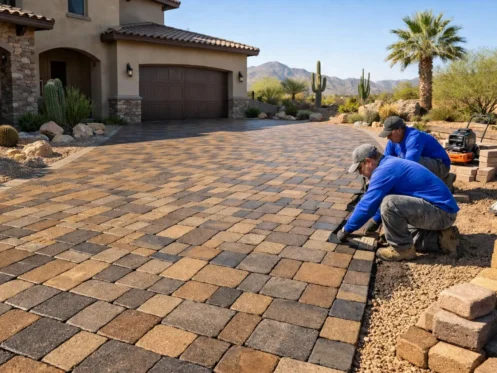
A driveway takes more punishment than almost any other part of a property. It handles hot tires, intense summer sun, delivery vehicles, guests, and the occasional monsoon downpour. A Phoenix paver driveway makeover is not simply a new surface – it is a chance to correct worn-out curb appeal, improve the arrival experience, and build a more durable front yard feature around how the property is actually used.
For homeowners in North Phoenix and nearby communities, the right approach starts below the pavers. Color, pattern, and borders matter, but a driveway that looks good for years depends on sound preparation, proper grading, and materials chosen for Arizona conditions.
Start With What the Existing Driveway Is Telling You
Cracks, faded concrete, pooling water, uneven edges, and oil stains can make a front yard feel neglected even when the home itself is well maintained. Some issues are cosmetic. Others point to movement in the soil, poor base conditions, or water flowing where it should not.
Before selecting pavers, look at how the driveway performs. Does water run toward the garage after a storm? Are there low areas where tires sit? Has the concrete settled near the street, side yard, or front walk? Is the driveway narrow enough that guests regularly drive over surrounding gravel or landscape material? These details affect the design and scope of the project.
A surface-only update may be appropriate when the existing layout works and the underlying area is stable. A fuller renovation is usually the better investment when there are drainage concerns, visible settlement, or a driveway layout that no longer fits the household. Addressing these conditions before installation helps prevent a beautiful new paver driveway from developing avoidable problems later.
Build the Phoenix Paver Driveway Makeover From the Ground Up
Pavers are individual units, which gives them a practical advantage over a single poured slab. When installed over a properly prepared base, they can accommodate minor movement and allow for targeted repairs if a section is ever damaged. That does not mean every paver installation performs the same way. The excavation depth, compacted base, edge restraint, bedding layer, and final joint sand all contribute to long-term results.
A quality installation begins with establishing the correct elevations. The driveway needs to meet the garage, sidewalk, street, and landscape areas cleanly while directing water away from structures. This is especially important on properties with decorative rock, turf, planting beds, or low front-yard walls that can interfere with natural flow if the grades are not planned carefully.
The base material is then placed and compacted in lifts to create a stable foundation. Edge restraints keep the field of pavers from spreading under vehicle traffic. Once the pavers are set, joint sand helps lock the surface together while still preserving the individual nature of the system.
The work below the finished surface is not the most visible part of a makeover, but it is where craftsmanship shows up over time. A driveway should feel solid underfoot, align cleanly with adjacent hardscape, and avoid dips that collect water after a storm.
Choose Colors and Patterns That Work With Desert Architecture
The most successful driveway designs support the home rather than competing with it. In Arizona, warm neutrals often pair well with stucco, stone veneer, clay roof tile, and desert planting. Charcoal, tan, sand, cream, travertine-inspired blends, and soft red-brown accents can all work well, depending on the home’s exterior palette.
Lighter colors can help reduce the visual heaviness of a large paved area and may feel more comfortable in direct sun. Darker pavers create contrast and can make a driveway feel more formal, but they can show dust and heat up quickly. Variegated blends are often a practical middle ground because they add depth while helping everyday dust, tire marks, and minor staining blend in more naturally.
Pattern should match the scale of the driveway and the style of the home. A clean running bond can suit contemporary or understated homes. Herringbone is a classic choice for driveways because its interlocking layout is well suited to vehicle traffic. More decorative patterns can be effective in an entry court or circular drive, though a busy layout may overwhelm a smaller front yard.
Borders are one of the best ways to make a driveway look intentionally designed. A contrasting soldier-course border can define the perimeter, tie into walkways, or echo an accent color already used on the home. The key is restraint. One strong border detail is usually more effective than several competing colors and patterns.
Make the Driveway Part of the Whole Front Yard
A driveway makeover often reveals opportunities to improve the spaces around it. Widening a walk, refreshing landscape rock, adding a paver landing near the entry, or incorporating low-voltage lighting can make the entire approach feel more finished. These updates do not all need to happen at once, but they should be considered together so materials, elevations, and transitions make sense.
For properties with a side gate, RV access, or frequent guest parking, function should guide the layout. A slightly wider drive or reinforced parking area may deliver more value than an elaborate pattern. For seasonal residents, a durable, low-maintenance design can provide peace of mind while the home is vacant.
Plan for Heat, Water, and Daily Wear
Phoenix-area driveways need to withstand conditions that are not always obvious during a design appointment. Summer heat can be relentless. Dust settles quickly. Monsoon rain can expose low spots and send runoff across hardscape. The goal is not to eliminate every maintenance task, but to choose a system that handles these realities well.
Proper slope is essential. Water should move away from the home and avoid being directed toward neighboring properties or areas where it can undermine the driveway edge. Depending on the site, the solution may involve careful grading, a collection point, or a revised transition between the driveway and surrounding landscape. This needs to be evaluated on the property, not guessed from a photo or a standard plan.
Traffic also matters. A two-car family with occasional visitors has different needs than a home with heavy pickup trucks, service vehicles, or frequent deliveries. Paver size, pattern, base preparation, and edge support should reflect the expected load. Spending wisely on preparation is often more valuable than selecting a more expensive paver while reducing the groundwork.
Know the Maintenance Before You Commit
Paver driveways are low maintenance, not no maintenance. The good news is that routine care is straightforward when the installation is sound. Regular sweeping removes dirt and organic debris before it settles into joints. A gentle wash can refresh the surface when dust builds up, and spills should be treated promptly to reduce the chance of staining.
Joint sand may need to be replenished over time, particularly after heavy weather or thorough cleaning. Some homeowners choose a stabilizing sand or a protective sealer, but these are not automatic requirements. Sealers can deepen color and make cleanup easier, yet they also need periodic reapplication and may change the surface appearance. The right choice depends on the paver product, desired finish, exposure, and willingness to maintain it.
If a paver becomes stained, chipped, or damaged, it can often be removed and replaced without demolishing the entire driveway. That repairability is one reason pavers remain a strong option for homeowners who want a long-term hardscape investment.
Work With a Contractor Who Looks Beyond the Surface
A driveway is a highly visible investment, and small installation details make a large difference. Clean cuts around curves and utility features, consistent joint lines, stable edges, proper transitions, and respectful jobsite communication all affect the finished experience.
Ask how the existing surface will be evaluated, how water flow will be handled, what base preparation is included, and how the driveway will connect to walks, gates, and landscape areas. A dependable contractor should be able to explain the process in clear terms, set realistic expectations, and help you distinguish between a cosmetic refresh and a renovation that solves underlying issues.
SonoranScapes Landscaping Maintenance LLC approaches hardscape improvements with the same detail-oriented mindset used across complete outdoor projects. For a driveway that is part of a broader front-yard update, having one experienced team coordinate the design and installation helps keep materials and workmanship consistent.
A well-planned paver driveway should make coming home feel better every day, not just on the day the work is finished. Start with the conditions of the site, choose materials that fit the home and the Arizona climate, and invest in the preparation that gives the finished surface a reason to last.