
 SERVING ANTHEM & SURROUNDING AREAS
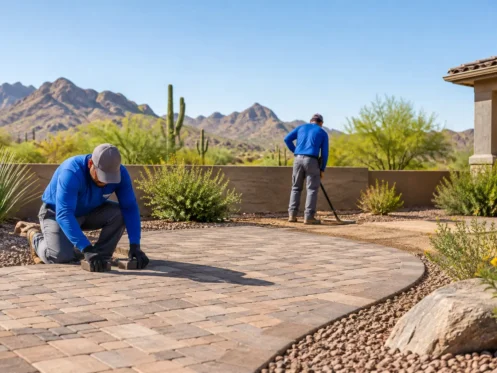
A patio that looks great in March can reveal every shortcut by August. Arizona heat, intense sun, monsoon runoff, shifting desert soils, and daily use all put hardscape work to the test. A successful Arizona hardscape installation guide starts with one principle: the surface material matters, but the preparation underneath it matters more.
Whether you are planning a front walkway, a pool deck update, a paver patio, a retaining wall, or a complete backyard living area, the best result comes from designing for how you will use the space and building for the conditions it will face year after year.
Start With the Purpose of the Space
Hardscape should solve a real need, not simply fill an empty area. Before choosing paver colors or outdoor kitchen finishes, consider how the property needs to function. A family that entertains on weekends may need a larger dining patio, clear paths from the kitchen, shade coverage, and durable seating areas. A seasonal homeowner may prioritize clean, low-maintenance materials and lighting that makes the property feel secure and welcoming after sunset.
Commercial properties have their own priorities. Entry paths, common-area patios, and decorative walls should support safe circulation, hold up to higher foot traffic, and maintain a polished appearance with reasonable upkeep.
Think through furniture placement early. A patio can look generous on a drawing but feel cramped once a dining table, chairs, grill, and fire feature are in place. Allow room to pull out chairs, walk around seating, and move comfortably between the house and key outdoor areas. If an outdoor kitchen or fireplace is planned, reserve enough space for installation access and safe clearances.
Arizona Hardscape Installation Guide: Build From the Ground Up
Pavers, flagstone, concrete, and block walls are only as dependable as their base. In North Phoenix and nearby communities, soil can range from loose desert material to extremely hard caliche. Grade changes, drainage patterns, and existing utilities can also affect the scope of the work. A site review before construction helps avoid surprises after materials arrive.
Grade and drainage come first
Water should move away from the home and out of the hardscape area in a controlled direction. Even in the desert, heavy monsoon rain can quickly expose poor drainage. Water that collects against a house, settles at the edge of a patio, or flows across a walkway can create damage, staining, and safety concerns.
The finished surface needs intentional slope. The exact approach depends on the property, nearby structures, and where water can safely discharge. Drainage channels, swales, catch basins, or other solutions may be appropriate when a standard slope is not enough. This is not an area to leave to guesswork, especially around pool decks, patios close to the home, or properties with limited outlet options.
Excavation and base preparation determine longevity
Proper excavation creates room for a compacted aggregate base, bedding material where applicable, and the finished surface. Skipping depth or compaction to save time can lead to settling, loose pavers, uneven edges, and standing water later.
For a paver project, a contractor typically excavates the area, establishes grade, installs and compacts the base in controlled lifts, then sets the bedding layer and pavers. Edge restraint is a critical detail. Without it, pavers can slowly spread and joints can open under foot traffic, furniture movement, or seasonal ground movement.
Concrete requires a different process, but preparation is still central. Subgrade quality, reinforcement, expansion joints, thickness, and finish selection should match the intended use. A decorative concrete patio may have different requirements than a driveway or a pad supporting a heavy outdoor kitchen.
Choose materials for heat, traffic, and maintenance
There is no single best hardscape material for every Arizona property. The right choice depends on budget, appearance, sun exposure, maintenance expectations, and how the space will be used.
Concrete pavers offer design flexibility, easy access for future adjustments, and a wide range of colors and patterns. They are a strong choice for patios, walkways, driveways, and pool-adjacent spaces when properly installed. Lighter colors can help reduce surface heat, though every exposed material will warm significantly in direct summer sun.
Natural stone creates a distinctive, high-end look, especially for pathways, patios, coping, and accent areas. Its variation is part of its appeal, but it also means material selection and installation skill matter. Some stone surfaces may need sealing or periodic attention depending on the product and exposure.
Concrete can provide a clean, economical surface for larger areas. It works well when the design calls for a continuous plane or when a simple, contemporary look fits the property. Decorative finishes can add character, but they should be selected with traction and long-term appearance in mind.
Segmental retaining wall block is often used to manage grade changes, define planting areas, create raised seating, or make a sloped yard more usable. Taller walls or walls that carry significant loads may require engineering, permits, drainage behind the wall, and reinforced construction. A wall is not simply stacked block. It is a structural feature that must resist soil pressure and move water properly.
Plan for Desert Sun Without Sacrificing the Design
A beautiful patio that is too hot to use for much of the year is not delivering full value. Shade should be part of the hardscape plan from the beginning rather than an afterthought. A pergola, patio cover, shade structure, mature tree placement, or a combination of features can make a major difference in comfort.
Surface color also deserves consideration. Dark pavers and stone can look striking, but they generally absorb more heat. They may work well in a shaded courtyard or as a border, while a lighter field color can be more comfortable in broad, fully exposed gathering areas. Samples should be viewed outdoors at different times of day, not only in a showroom or under indoor lighting.
Lighting extends the usefulness of the space and improves safety. Low-voltage path lights, step lights, wall lighting, and carefully aimed accent fixtures can define circulation without making the yard feel overlit. For outdoor kitchens and dining areas, task lighting should be planned around how the space will actually be used after dark.
Coordinate Hardscape With the Rest of the Landscape
Hardscape and landscaping should feel like one plan. A new paver patio may change how water moves through the yard. A retaining wall can create an opportunity for planting pockets or built-in seating. Artificial turf can soften a large paved area and create a practical play space or putting area, while gravel and desert-adapted plantings can frame hardscape with lower ongoing maintenance needs.
This coordination is especially valuable for full backyard renovations. Installing a patio first and trying to fit every other feature around it can lead to awkward transitions, unnecessary demolition, and missed opportunities. A complete plan helps establish the order of work, locate sleeves for future electrical needs, and make sure walls, kitchens, fire features, turf, lighting, and planting areas connect naturally.
Pool deck remodels deserve added attention. The selected surface should provide comfortable footing, appropriate traction, and a finished look that complements the pool while handling water exposure and outdoor chemicals. Drainage and transitions to gates, steps, and surrounding landscape are just as important as the deck color.
Know When a Permit or Engineering May Be Needed
Requirements vary by municipality, HOA, project type, wall height, and proximity to property lines. A simple ground-level patio may have fewer requirements than a raised structure, gas-connected fire feature, outdoor kitchen, or retaining wall. Properties in Anthem, North Phoenix, Cave Creek, and surrounding communities may also have design standards that affect material colors, wall styles, or project approvals.
A professional contractor can help identify these considerations before construction begins. That early review protects the schedule and helps prevent expensive changes after work is underway.
Select a Contractor Who Explains the Details
Price matters, but the lowest quote does not always account for the same level of preparation, materials, drainage work, or project management. When comparing proposals, ask what is included in demolition, excavation, base preparation, edge restraint, compaction, cleanup, and any required approvals. Clarify who is managing the work and how changes will be communicated if site conditions differ from expectations.
The right contractor should be comfortable discussing the practical details, not just showing attractive photos. You should understand the material plan, the expected schedule, how the work area will be protected, and what the finished project will require for care. For homeowners who want one experienced team to coordinate design, construction, and long-term landscape service, SonoranScapes brings that continuity to outdoor projects throughout the North Valley.
Hardscape is one of the most visible investments you can make in an Arizona property. Give it the planning and foundation it deserves, and the result can be a comfortable, durable outdoor space that looks intentional long after the first summer has passed.