
 SERVING ANTHEM & SURROUNDING AREAS
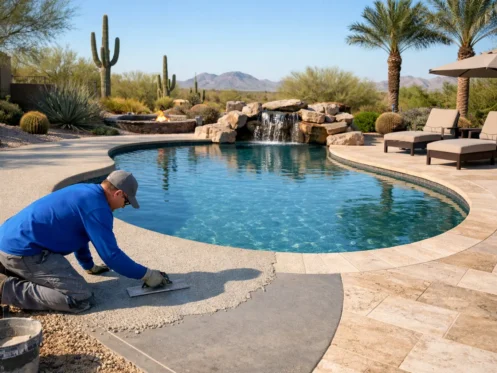
A North Phoenix pool deck can look beautiful in spring and still become uncomfortable, slippery, stained, or cracked after a few hard Arizona summers. Choosing among the best pool deck finishes Arizona homeowners have available is not simply a color decision. The right surface needs to handle intense sun, bare feet, pool water, cleaning products, daily traffic, and the style of the rest of your backyard.
The best choice depends on whether you are renovating an aging concrete slab, building a new pool area, creating a low-maintenance space for a seasonal home, or updating a property where appearance and safety both matter. A good deck finish should look intentional from the patio door, feel comfortable around the water, and hold up without becoming a constant project.
What Arizona Pool Decks Need to Handle
Arizona heat changes the conversation. Dark, dense materials can absorb a great deal of heat, while highly reflective finishes may create glare around the pool. Summer monsoon storms can quickly expose drainage problems, and repeated wet-and-dry cycles make traction a practical concern rather than an optional upgrade.
For most homeowners, the priority order is straightforward: comfortable footing, slip resistance, long-term durability, manageable maintenance, and a finish that works with the home’s architecture. A deck that looks great in a small sample but does not suit the site can become an expensive disappointment.
Before selecting a finish, look at the pool’s sun exposure, the amount of existing shade, how the deck is used, and the condition of the concrete underneath. Families with young children, homeowners who entertain often, and property managers responsible for common areas may prioritize texture and traction differently than someone designing a quieter backyard retreat.
Best Pool Deck Finishes for Arizona Homes
Cool deck coatings
A cool deck coating is one of the most popular choices for existing concrete pool decks. These acrylic-based textured coatings are installed over a properly prepared slab and are available in a range of colors and patterns. Their textured profile helps improve traction, and lighter colors generally make the surface more comfortable under direct sun than uncoated concrete or darker finishes.
This option works especially well when the concrete is structurally sound but looks tired, discolored, or dated. It can give a pool area a fresh, unified appearance without the cost and disruption of removing the entire deck.
The trade-off is preparation. Coatings are only as reliable as the surface beneath them. Significant cracking, movement, drainage issues, or failing prior coatings should be evaluated before moving forward. A quality installation includes careful surface preparation and realistic attention to repair needs, not simply applying a new finish over old problems.
Travertine pavers
Travertine remains a strong choice for homeowners who want a high-end, natural look with a surface that tends to stay more comfortable than many dense stone options. Its light, earthy tones pair naturally with desert landscaping, stucco homes, outdoor kitchens, and modern backyard renovations.
Because pavers are installed with joints, travertine can also offer practical advantages around drainage and future repairs. If an individual piece is damaged, it can often be replaced without tearing out a large section of deck. The texture and natural variation create a refined look that does not feel overly formal.
Travertine requires a larger upfront investment than many coatings or basic concrete finishes. It also needs professional installation with a stable base, correct edge details, and thoughtful layout. Not all travertine is equal, so material selection matters. Lower-quality stone or poor installation can lead to loose pieces, uneven areas, and avoidable maintenance.
Concrete pavers
Concrete pavers offer a broad range of colors, shapes, and patterns, making them a practical fit for homeowners who want design flexibility. They can complement existing patios, walkways, fire features, and landscape borders while providing a more finished appearance than plain concrete.
Pavers are particularly useful when a project calls for coordinated outdoor living areas. A pool deck can transition into a covered patio or entertaining space without the abrupt visual break that often comes with multiple unrelated materials.
Like travertine, pavers need a properly constructed base and edge restraint. The joints will require occasional attention, and lighter colors are usually the smarter choice for areas with heavy sun exposure. When planned and installed well, pavers are durable, repairable, and well suited to Arizona backyards.
Stamped concrete
Stamped concrete can create the appearance of stone, slate, tile, or a custom pattern while maintaining a continuous concrete surface. It is a good option for new construction or major deck replacement when the goal is a tailored look without using individual pavers.
The finish can be attractive, but it deserves a careful conversation about texture, color, and heat. Deeply embossed patterns may collect debris, while some sealers can become slippery when wet or increase glare. Dark colors often look dramatic in photographs but may not be comfortable around a pool during the hottest months.
For Arizona pool areas, a subtle pattern, an appropriate slip-resistant additive, and a lighter color palette usually produce the better long-term result. The installer’s craftsmanship matters as much as the stamped pattern itself.
Broom-finished or exposed aggregate concrete
For a clean, practical deck with dependable traction, broom-finished or exposed aggregate concrete can be an excellent fit. Broom-finished concrete has a lightly textured surface created during installation. Exposed aggregate reveals small decorative stones within the concrete, adding texture and visual interest.
These finishes are often chosen for their durability and straightforward maintenance. They are especially useful for larger pool areas, commercial properties, or homeowners who want a simple surface that does not compete with the rest of the backyard design.
Exposed aggregate can feel rougher on bare feet than other options, depending on the stone and finish. Broom-finished concrete is less decorative than pavers or travertine, but it can look polished and intentional when paired with clean coping, thoughtful lighting, and well-designed landscaping.
How to Choose the Right Finish for Your Pool Deck
Start with the existing deck. If the slab is in good condition, a coating may provide the best value. If there are widespread cracks, settling, or a layout that no longer fits the way you use the yard, a more complete renovation with pavers or new concrete may make better sense.
Next, consider heat and shade honestly. A deck with little shade receives far more direct exposure than one sheltered by a covered patio, mature trees, or shade structures. Light beige, sand, cream, and soft gray tones are often more forgiving in Arizona than charcoal, black, or deep brown. Still, no finish remains cool under every summer condition, so test samples in the actual sunlight whenever possible.
Then think about maintenance. Coatings may need periodic cleaning and eventual renewal. Natural stone may benefit from sealing, depending on the material and the desired appearance. Pavers can require joint maintenance. There is no zero-maintenance pool deck, but there is a major difference between reasonable care and repeated repairs caused by a poor material choice or rushed installation.
Finally, make sure the deck belongs to the whole property. Pool coping, patio furniture, home exterior colors, landscape materials, and lighting all affect the finished look. A deck remodel is a chance to create a more connected backyard, not just cover old concrete.
Details That Protect the Investment
The finish is only one part of a successful pool deck remodel. Drainage, deck slope, coping transitions, expansion joints, and the condition of the existing slab all deserve attention. These less visible details determine whether water moves away from the home and pool area as intended and whether the deck stays functional over time.
It is also worth planning for how the space will be used after dark. Path lighting, step lighting, and carefully placed outdoor lighting can make the deck safer while giving the pool area a more finished, welcoming feel. For homes in Anthem, North Phoenix, and nearby communities, this planning is especially valuable because outdoor spaces are used through much of the year.
A dependable contractor should walk the site with you, explain the options in plain language, and identify concerns before the work begins. At SonoranScapes, that means looking beyond the surface finish to help homeowners make choices that support the backyard they actually want to enjoy.
The right pool deck does not need to chase every trend. Choose a finish that fits your sun exposure, your budget, your maintenance expectations, and the way your family or guests use the space – then give the installation details the same attention as the color and pattern.