
 SERVING ANTHEM & SURROUNDING AREAS
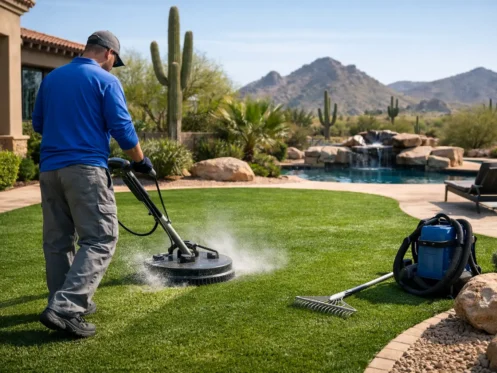
A backyard can look spotless at a glance and still hold onto the things Arizona life leaves behind: fine dust, pet hair, dry leaves, spilled drinks, and the occasional monsoon deposit. Artificial turf cleaning is what keeps that polished green surface looking intentional instead of matted, dusty, or tired.
Unlike natural grass, turf does not need mowing or weekly watering. It does need a sensible maintenance routine. The right approach protects the fibers, keeps the infill distributed, reduces odors, and helps your investment stay attractive through long summers, active weekends, and visits from pets.
Why Artificial Turf Cleaning Matters in Arizona
Artificial turf is built to handle heat, foot traffic, and daily use, but it is not completely maintenance-free. In North Phoenix and surrounding communities, wind can carry dust and desert debris into the yard quickly. Leaves from mature shade trees, pollen, pet waste, and food from outdoor gatherings can settle below the blades where a quick visual check may miss them.
Cleaning also helps the turf perform the way it should. When fibers become flattened, the lawn can develop traffic patterns and lose its full, upright appearance. When infill shifts or compacts, the surface may feel firmer and drain less effectively. A little regular attention is far easier and less expensive than waiting until the turf looks worn down.
For pet owners, cleaning is especially important. Urine can leave odor behind when heat and bacteria build up, particularly in favorite potty areas. A routine that includes rinsing and occasional odor treatment keeps the space more enjoyable for the whole household.
A Practical Artificial Turf Cleaning Routine
The best schedule depends on how the area is used. A quiet front yard may only need light attention every few weeks, while a backyard with dogs, children, a pool, or frequent entertaining may need a quick cleanup several times a week.
Remove surface debris before it gets ground in
Start by clearing leaves, twigs, seed pods, and loose trash with a leaf blower, plastic rake, or soft-bristle broom. A blower is often the fastest option for larger yards, especially when dry debris collects around edges, patios, and landscape beds.
Avoid metal rakes with sharp tines. They can pull at turf fibers, disturb seams, and move more infill than necessary. If a plastic rake feels too aggressive for a particular turf product, use a broom or a power broom designed for synthetic grass.
This small task makes a noticeable difference. Debris traps moisture, creates shaded spots where odors can linger, and makes the lawn look neglected even when the turf itself is in good condition.
Rinse dust and light spills away
A gentle rinse with a garden hose removes dust, pollen, and everyday residue. For most Arizona homes, rinsing high-use areas every one to two weeks is a reasonable starting point. During dusty stretches or after a storm, an extra rinse can restore the turf’s color and freshness quickly.
Use normal water pressure rather than a high-pressure washer. Excessive force can displace infill, damage seams, or push debris deeper into the backing. Work from one side toward a drainage edge so dirt is carried away rather than redistributed.
For a small drink spill or muddy paw prints, rinse the area promptly. Most spills do not require a specialty cleaner when they are handled early. Mild soap and water can help with sticky residue, but rinse thoroughly afterward so soap does not leave a film that attracts more dust.
Brush the fibers to bring back a natural look
Brushing is one of the most overlooked parts of artificial turf cleaning. Foot traffic naturally presses the blades down, especially near gates, patio doors, play areas, and putting greens. Brushing against the direction of the grain lifts the fibers and gives the surface a fuller, more uniform appearance.
A stiff synthetic-bristle broom works for small areas. For larger residential or commercial properties, a mechanical power broom can save time and produce more even results. The goal is not to scrub aggressively. It is to gently lift fibers while keeping infill where it belongs.
Most properties benefit from brushing every month or two. Heavily used pet runs, outdoor gathering spaces, and sports areas may need it more often. If the turf still looks flat after brushing, the infill may need professional evaluation and redistribution.
Address pet odors at the source
Pet waste should be removed as soon as possible, just as it would be on natural grass. After removing solids, rinse the spot with water. For urine areas, regular rinsing helps dilute residue, but water alone may not fully solve persistent odors during hot weather.
An enzyme-based turf deodorizer is usually the best option for pet odor because it targets the organic material causing the smell. Apply it according to the product instructions and allow it enough contact time to work. Avoid harsh bleach, strong acids, or household chemicals that can damage fibers, fade color, or create an unpleasant residue for pets and children.
If odor returns in the same areas despite regular treatment, the issue may be deeper in the infill or drainage layer. That is a good time to bring in a landscaping professional rather than adding more chemicals. The right service can identify whether the problem is surface buildup, compacted infill, or a drainage concern.
What Not to Use on Synthetic Grass
Turf is durable, but the wrong cleaning method can shorten its useful life. High heat is one concern. Do not place a hot grill, fire pit, or metal furniture leg directly on the turf. Synthetic fibers can melt or deform, and burn marks are difficult to disguise.
Chemical choices matter as well. Skip bleach, solvent-based cleaners, and acidic products unless the turf manufacturer specifically approves them. These products may affect color, backing, seams, or nearby landscape materials. For most routine cleaning, water, a mild turf-safe cleaner, and an enzyme odor treatment for pet areas are enough.
Be cautious with pressure washers and rotating brush attachments. They may seem like a quick fix, but they can rough up the turf, scatter infill, and expose weak spots along seams. A careful rinse and proper brushing are safer for routine maintenance.
When Professional Turf Service Makes Sense
A homeowner can handle most weekly and monthly upkeep, but some situations call for a more detailed service. Commercial properties, vacation homes, and busy family yards can benefit from scheduled maintenance that keeps the surface presentable without adding another task to the calendar.
Professional service is worth considering when turf has widespread flattening, noticeable odor, uneven infill, stains that do not respond to gentle cleaning, or debris packed deep into the fibers. It is also helpful after a major dust storm, a landscaping project, or an extended period when a seasonal homeowner has been away.
A trained landscape team can clean the turf while looking at the larger outdoor picture: edging, pavers, planting areas, drainage patterns, and the transitions where debris tends to collect. That attention to detail helps the entire property look cared for, not just the lawn.
For property managers, regular turf care supports curb appeal and tenant experience. Clean turf at an entry, common area, dog run, or poolside space sends a clear message that the property is maintained. It also helps prevent minor cleanliness issues from becoming recurring complaints.
Keep the Routine Simple and Consistent
The goal is not to turn a low-maintenance lawn into a demanding chore. For most homes, remove debris as needed, rinse regularly, brush traffic areas periodically, and treat pet zones before odors become established. Adjust the schedule for your household, tree cover, pets, and how often the space is used.
At SonoranScapes Landscaping Maintenance, we believe outdoor improvements should continue to look good long after installation. A clean, well-kept turf surface makes the backyard more inviting for morning coffee, family time, and the gatherings that make a house feel like home.
If your turf is looking flat, dusty, or less fresh than it should, start with a gentle cleanup this week. A few consistent habits can bring back the clean, finished appearance you chose artificial grass for in the first place.