
 SERVING ANTHEM & SURROUNDING AREAS
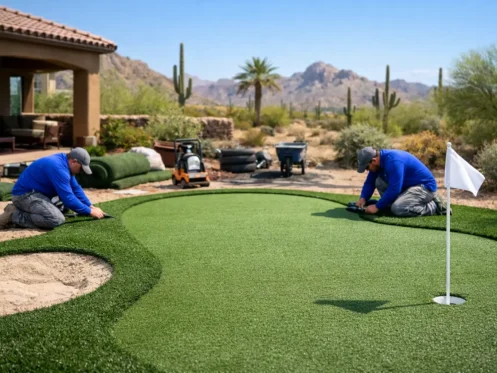
A backyard putting green should feel like a place you want to use after work, not a decorative patch of turf that sits untouched. Putting green installation cost varies because every yard, putting style, and finish level is different. The most useful number is not a one-size-fits-all price – it is a detailed estimate that accounts for how the green will play, how it will drain, and how it fits into the rest of your outdoor space.
For many North Phoenix-area homeowners, a professionally installed synthetic putting green is a worthwhile way to create a low-maintenance recreation area while improving the look and usability of a backyard. Knowing where the budget goes helps you compare quotes with confidence and decide which upgrades matter most.
What Does Putting Green Installation Cost?
Most professionally installed residential putting greens cost roughly $18 to $35 or more per square foot. A compact practice green may start around $3,000 to $5,000, while a larger custom green with multiple cups, contours, fringe turf, boulders, pavers, or lighting can range from $8,000 to $15,000 or beyond.
Those ranges are useful starting points, but square footage alone does not tell the full story. A simple 250-square-foot green on a level, accessible lot will require less labor and material than the same-size green built into a sloped backyard with tight access and several elevation changes. A contractor should look at the property before offering a meaningful price.
The goal is not simply to install green-colored turf. The base needs to remain stable, water needs a planned path away from the area, seams need to be clean, and the finished surface needs to roll consistently. Those details are what separate a putting green that performs well for years from one that develops low spots, wrinkles, or poor ball roll.
The Main Factors Behind Your Project Price
Size and shape of the green
A larger green requires more excavation, base material, turf, infill, and labor. It also usually has more edge detail. However, very small greens are not always inexpensive on a per-square-foot basis because mobilization, site preparation, and finishing work still take time.
Shape matters just as much as size. A straightforward oval or kidney-shaped green is generally more efficient to install than a detailed design that winds around planters, pool decking, or existing hardscape. Curves can look excellent, but they create more cutting, seaming, and edge work.
Base preparation and site conditions
The base is the foundation of the project. It typically involves removing existing material, grading the area, placing compacted aggregate, and carefully shaping the surface before turf is installed. In Arizona, hard native soil, caliche, rock, slopes, and limited equipment access can add time and cost.
This is one area where a low quote deserves a closer look. Skipping proper excavation or compaction may save money at the start, but it can lead to an uneven surface later. A dependable installer will explain what is included below the turf, not just show you a turf sample.
Turf quality and putting performance
Putting green turf is designed differently from standard landscape turf. It has a shorter pile and a denser surface that supports a smoother roll. Better products often offer more realistic ball speed, stronger backing, improved color retention, and a more natural appearance.
The right turf depends on how you plan to use the space. A homeowner who wants casual practice with family may prefer a forgiving, medium-speed surface. A serious golfer may want a faster green with more precise contours. There is no universal best choice, and the most expensive turf is not automatically the best fit for every yard.
Contours, cups, and fringe areas
Subtle breaks and slopes make a green more interesting, but shaping them correctly requires skill and additional labor. One cup on a mostly level green is a simple setup. Multiple cups, changing pin locations, tiers, and realistic undulation create a more customized practice experience and raise the budget.
Fringe turf also affects the overall cost. It creates a finished transition around the putting surface and can provide space for chipping, but it adds material and installation area. Many homeowners find that a fringe makes the green look more natural and gives the project a more complete appearance.
Finishing features around the green
A putting green often becomes part of a larger outdoor living plan. Paver borders, decorative rock, landscape lighting, seating areas, boulders, or a small patio can make it feel intentional rather than added on. These features are optional, but they should be considered early so the layout, grades, and access all work together.
If the green is near a pool deck, outdoor kitchen, or existing planting beds, careful transitions are especially important. The best design protects the functionality of each area instead of forcing several backyard features to compete for space.
What a Complete Installation Should Include
When comparing estimates, ask contractors to identify the scope of work clearly. A complete quote should explain the removal or preparation of the existing area, excavation depth, base materials, compaction, turf selection, cup installation, infill, seams, edging, cleanup, and any agreed-upon landscape finishes.
It is also helpful to ask how the installer will address drainage and elevation. Even a synthetic green needs thoughtful grading. Water should not collect at the edge of the turf or move toward a patio, home foundation, or neighboring area.
A detailed scope prevents surprises and makes it easier to compare proposals fairly. One price may appear lower because it excludes demolition, base work, hauling, or border materials. Another may include a stronger long-term installation with fewer change orders later.
Ways to Manage the Budget Without Cutting Corners
The best way to control putting green installation cost is to simplify the design while protecting the foundation. Choose a manageable footprint, limit elaborate contours, and start with one or two cups if the space is primarily for casual practice. A well-built smaller green often provides more enjoyment than a large project that stretches the budget too far.
You can also phase surrounding upgrades. Install the green and its necessary border first, then add lighting, seating, decorative features, or expanded hardscape when the timing is right. Planning those future additions during the original design can prevent unnecessary rework.
What should not be reduced is the preparation beneath the turf. Proper excavation, compaction, and grading are not glamorous line items, but they are central to the finished result. Saving money by using a thinner or poorly compacted base can create problems that are far more expensive to correct later.
Is a Putting Green Worth the Investment?
For the right household, a putting green offers more than a golf accessory. It creates a reason to spend time outside, gives guests something to enjoy, and delivers a clean, green focal point without the mowing, fertilizing, or frequent upkeep of natural grass. It can be especially practical in yards where traditional lawn would require substantial water and regular attention.
Its value depends on how often it will be used and how well it fits the property. If golf is an occasional interest and backyard space is limited, a compact green may be the better choice. If the household entertains often or includes dedicated golfers, a larger practice area with a fringe may provide more return in daily enjoyment.
For commercial properties, a putting green can also create a distinctive amenity for residents, guests, or employees. In that setting, durability, appearance, and a maintenance plan should be part of the conversation from the beginning.
Getting a Quote That Reflects Your Yard
The most accurate estimate begins with an on-site conversation about your available space, desired play style, access, existing surfaces, and the features you want nearby. Bring photos of greens you like, but be open to recommendations based on the way your yard actually drains, faces the sun, and connects to the rest of the landscape.
SonoranScapes helps homeowners create putting greens that look finished, play consistently, and complement the way they use their outdoor space. A clear, site-specific proposal gives you the information to make a confident decision without guessing at what is included.
A thoughtfully designed green does not need every premium feature to be rewarding. It needs a stable base, quality materials, purposeful shaping, and craftsmanship that makes stepping outside for a few putts feel easy and worthwhile.